wondrx
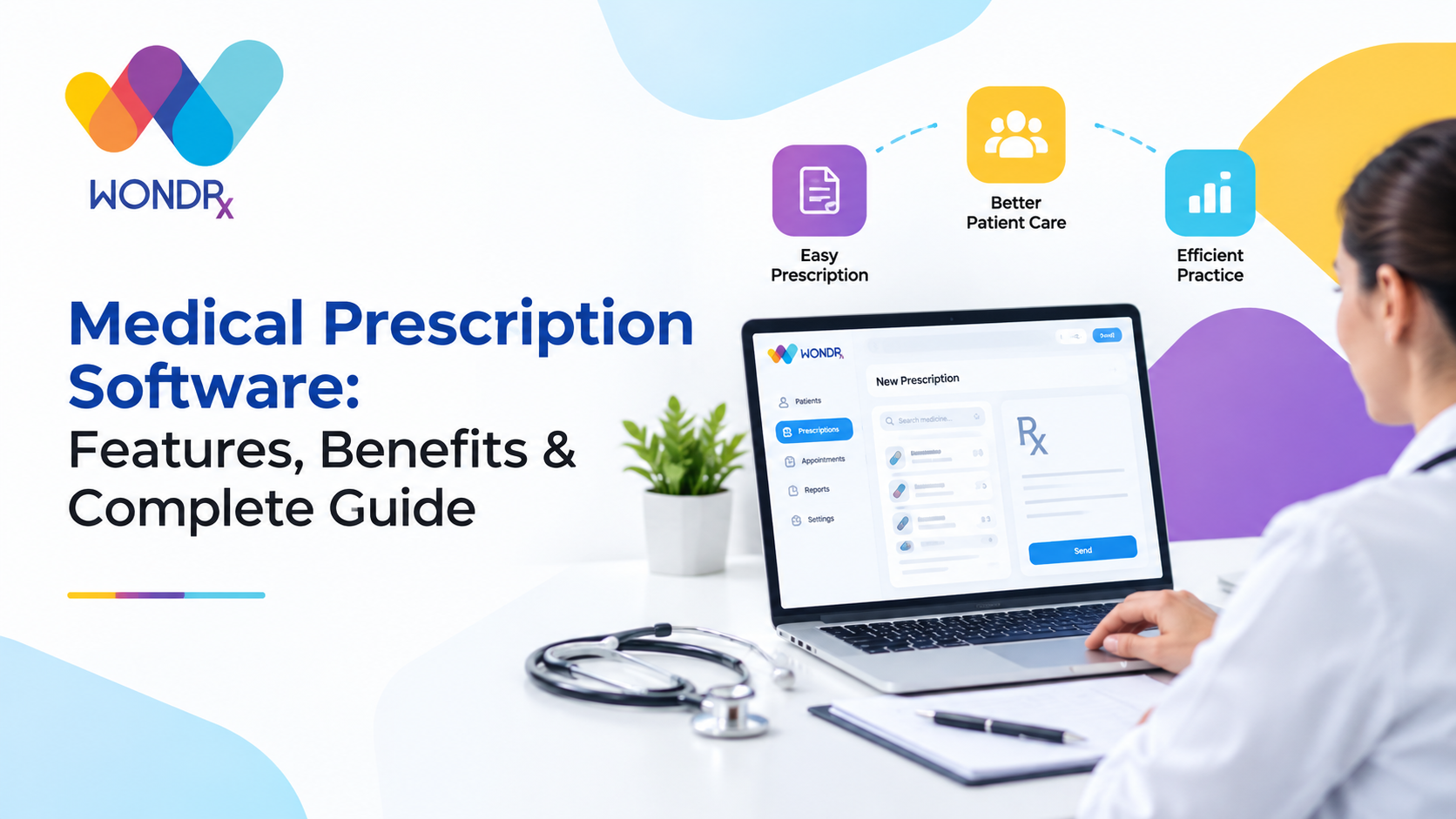

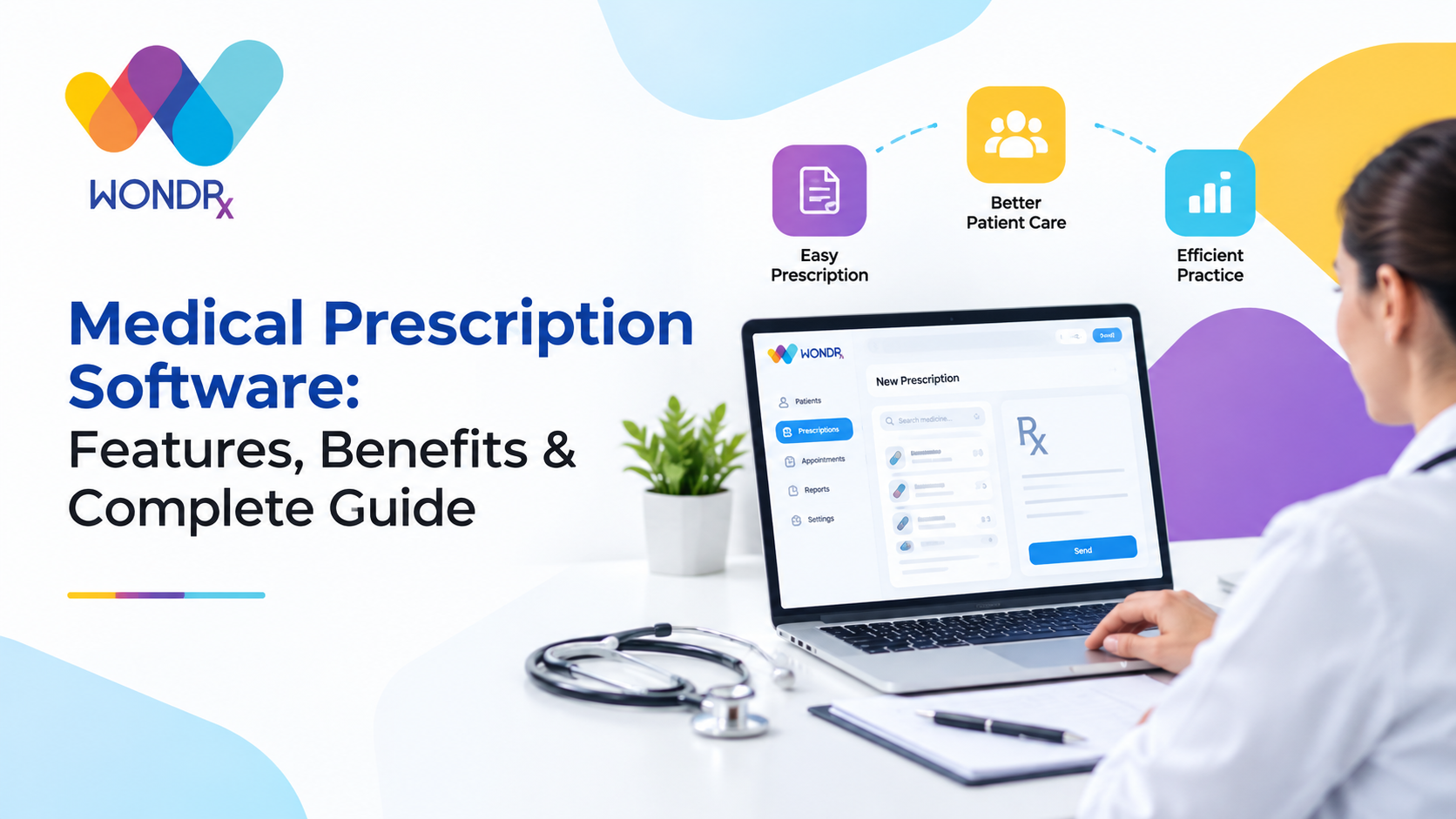
Walk into almost any clinic today and you will notice something that would have looked out of place a decade ago: doctors typing instead of scribbling. That shift did not happen by accident. Handwritten prescriptions have long been a quiet source of frustration in healthcare, from pharmacists squinting at illegible handwriting to patients receiving the wrong dosage because a "10" looked like a "70." Medication errors tied to poor handwriting and manual processes have cost the healthcare industry billions of dollars and, more importantly, put patient safety at risk.
This is exactly the gap that medical prescription software was built to close. Whether it is a hospital-wide system or a lightweight medical prescription app used by a solo practitioner, the goal is the same: make prescribing faster, safer, and easier to track.
In this guide, we will break down what medical prescription software actually does, the features that matter most when choosing one, the real benefits it brings to clinics and patients, and what to look for before you invest in a solution. If you are a healthcare provider, clinic owner, or someone researching digital health tools, this article should give you a clear, practical picture of where this technology stands today.
Medical prescription software is a digital platform that allows healthcare providers to create, manage, transmit, and track prescriptions electronically instead of relying on paper. It is often referred to as e-prescribing software, and when built for mobile use, it takes the form of a medical prescription app that doctors can use from a tablet or phone during patient visits or even during telehealth consultations.
At its core, the software connects the prescriber, the pharmacy, and sometimes the insurance provider in a single digital workflow. Instead of a patient carrying a slip of paper to the nearest pharmacy, the prescription is sent electronically, checked against the patient's medical history, and often ready for pickup before the patient even leaves the clinic.
This is not a new concept globally. Countries like the United States have had regulatory frameworks around e-prescribing (EPCS, for controlled substances) for years, and many other regions are now catching up with their own digital health mandates.
Paper prescriptions carry risks that most people outside healthcare rarely think about. Handwriting errors, duplicate medications, missed drug interactions, and lost prescriptions are common problems that a good medical prescription software can largely eliminate.
There is also the matter of accountability. With paper, tracing back who prescribed what, and when, can be a slow and manual process, especially in larger hospitals with multiple departments. Digital systems keep a timestamped record of every action, which matters both for patient safety and for legal or insurance purposes.
Add to this the rise of telemedicine, where a doctor may never physically see the patient in person, and it becomes clear why a reliable medical prescription app is no longer a nice-to-have. It is close to a necessity for any clinic trying to operate efficiently in 2025 and beyond.
Not all prescription software is built the same way. Here are the features that separate a genuinely useful platform from a basic digital form.
This is the foundation. Doctors should be able to generate a prescription digitally and send it directly to a pharmacy of the patient's choice, without printing anything.
A good system automatically flags potential drug-to-drug interactions, allergy conflicts, and dosage concerns based on the patient's existing medication list and medical history. This single feature alone prevents a significant number of adverse drug events.
Access to a patient's complete prescription history, ideally pulled from multiple providers and pharmacies, helps doctors avoid duplicate prescriptions and better understand what has or has not worked for that patient in the past.
Since prescriptions carry legal weight, especially for controlled substances, the software needs secure digital signatures and multi-factor authentication to confirm the prescriber's identity.
This feature checks whether a prescribed medication is covered under the patient's insurance plan and suggests covered alternatives when it is not, saving the patient an unpleasant surprise at the pharmacy counter.
The best medical prescription software does not operate in isolation. It should sync smoothly with electronic health records so that prescribing decisions are informed by the patient's full clinical picture, not just what is manually entered.
Automated refill requests, reminders, and approvals reduce the back-and-forth between patients, pharmacies, and clinics.
A medical prescription app extends all of this functionality to smartphones and tablets, which matters enormously for doctors who visit multiple locations, work in home care, or run telehealth practices.
Built-in compliance with regulations like HIPAA (in the US) or equivalent data protection laws elsewhere, along with a detailed audit trail of every prescription action, protects both the patient and the provider.
Many platforms now include dashboards that show prescribing patterns, common diagnoses, and medication trends, which can be genuinely useful for clinics trying to improve care quality over time.
Time savings are the most immediate benefit. Prescriptions that used to take a few minutes to write, explain, and hand over can now be completed in seconds. Fewer phone calls from pharmacies asking for clarification also means less administrative burden on clinical staff.
There is also a liability angle. Digital records with clear timestamps and audit trails offer better legal protection compared to handwritten notes that can be misread or disputed.
Pharmacists no longer need to decipher handwriting or call back for clarification, which speeds up dispensing and reduces the chance of filling the wrong medication or dosage. Many prescription systems also flag inventory needs in advance, helping pharmacies manage stock more effectively.
Patients benefit from faster service, fewer errors, and more transparency. Many platforms allow patients to view their own prescription history, request refills, and receive reminders to take medication on schedule, something that manual systems simply cannot offer at scale.
There is also a real cost benefit. Formulary checks that suggest cheaper, covered alternatives can meaningfully reduce out-of-pocket expenses, particularly for patients managing chronic conditions that require ongoing medication.
At a larger scale, digital prescribing supports better public health data. Aggregated, anonymized prescribing trends help researchers and policymakers understand medication usage patterns, track the spread of certain treatments, and identify potential overprescribing of controlled substances.
Broadly speaking, medical prescription software falls into a few categories:
Standalone e-prescribing platforms are built specifically for prescription management and often integrate with third-party EHR systems.
EHR-embedded prescribing modules come as part of a larger electronic health record system, offering tighter integration but sometimes less flexibility.
Telehealth-native prescription apps are designed for virtual care providers who need to prescribe remotely, often with built-in video consultation tools alongside the prescribing feature.
Specialty-specific solutions cater to fields like psychiatry or pain management, where controlled substance regulations require extra layers of verification and tracking.
Choosing between these depends heavily on the size of the practice, existing technology infrastructure, and whether the clinic already uses an EHR system that needs to be paired with prescribing functionality.
Medical prescription software has quietly become one of the more impactful pieces of technology in modern healthcare, not because it is flashy, but because it solves a problem that has existed for as long as prescriptions themselves: the gap between what a doctor intends and what actually gets dispensed safely to a patient.
For clinics still relying on paper, the shift toward a digital medical prescription app is less about following a trend and more about closing real safety gaps, saving administrative time, and giving patients a smoother, more transparent experience. The technology has matured enough that cost and complexity are no longer the barriers they once were, even for smaller practices.
If you are evaluating options, the best approach is to match the software's features against your specific clinical workflow rather than choosing based on brand recognition alone. A platform that fits how your team actually works will always outperform one that simply has the longest feature list on paper.
Explore medical prescription software, its key features, benefits, and how digital prescriptions help doctors streamline workflows, improve accuracy, and enhance patient care.